
Slow Motion Video Editor: A Complete Guide for International Clients

Introduction
Slow Motion Video Editor is one of the most powerful visual techniques in modern video production. Whether it’s a dramatic cinematic moment, a product showcase, a fitness movement, or a viral YouTube sequence — slow motion instantly makes your content feel premium and emotionally impactful. For U.S., Canadian, UK, and other international creators, hiring a slow motion–skilled video editor is the key to turning basic footage into a polished, professional experience.
This blog explains how slow motion editing works, why frame rate matters, what tools editors use, and why Indian editors have become the preferred choice for global clients looking for high-end slow-motion visuals.
Table of Contents
- What Is Slow Motion Editing?
- Why Slow Motion Improves Video Quality
- Types of Slow Motion Techniques Editors Use
- Why Frame Rate Matters (FPS Explained)
- Why U.S. & Canadian Clients Hire Indian Slow Motion Editors
- Software Used for Slow Motion Editing
- Agency Workflow for Smooth Slow Motion Editing
- Mistakes Beginners Make With Slow Motion
- Conclusion
1. What Is Slow Motion Editing?
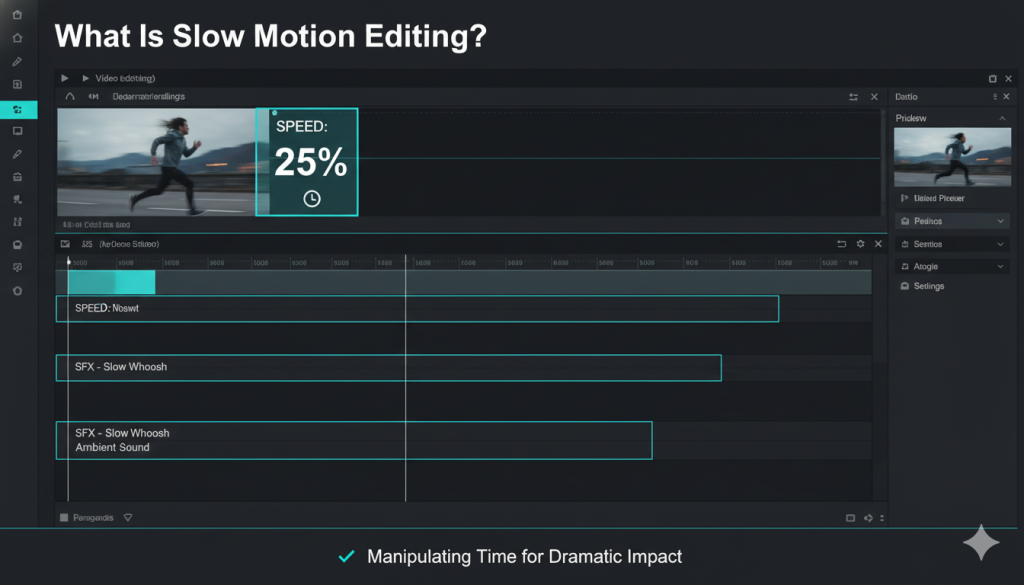
Slow motion editing is the process of reducing the playback speed of a clip to create dramatic, emotional, or visually enhanced moments. It requires more than changing the speed — a skilled editor ensures smoothness, clarity, stabilization, and proper motion rendering.
What Slow Motion Really Means
- Controlled speed reduction
- Frame blending or optical flow
- Maintaining video quality
- Enhancing dramatic or key moments
2. Why Slow Motion Improves Video Quality
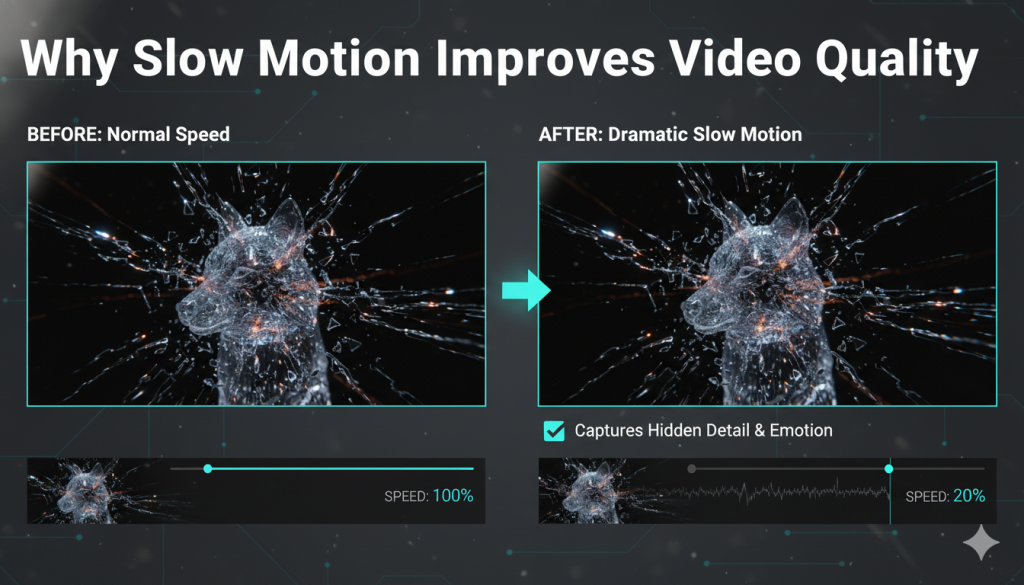
Slow motion grabs attention instantly. It makes moments feel important, highlights details the eye usually misses, and increases the perceived professionalism of your content.
Benefits
- Makes action look cinematic
- Enhances emotional storytelling
- Creates depth and visual interest
- Perfect for fitness, travel, product, and cinematic content
3. Types of Slow Motion Techniques Editors Use
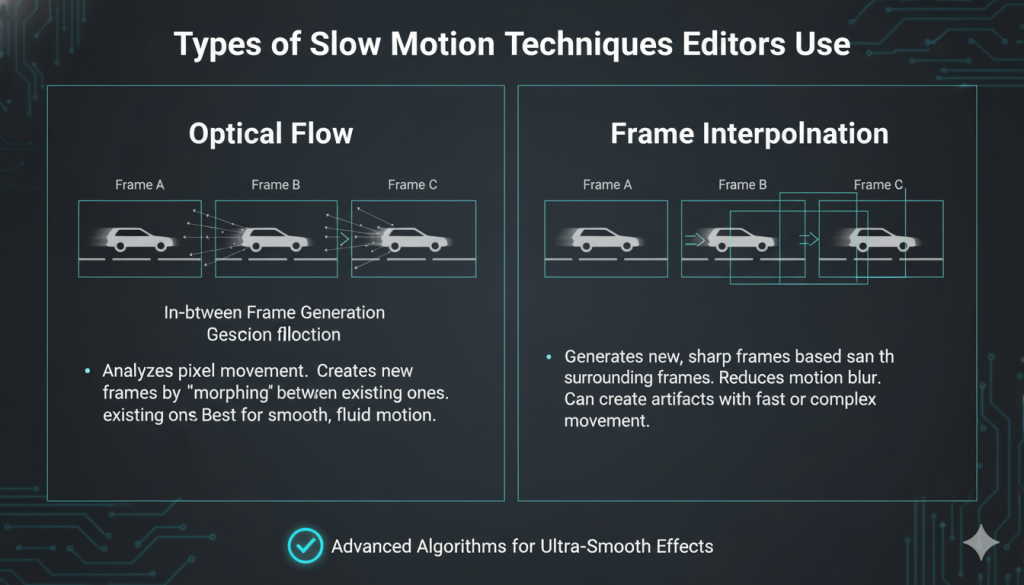
Different types of slow motion require different editing approaches, depending on footage and desired style.
Common Techniques
- Simple Speed Reduction (ideal for 60fps+ footage)
- Optical Flow Slow Motion (AI-generated frames for extra smoothness)
- Frame Blending (soft transitions between frames)
- Hyper-Slow Motion (sports/product shots at 120–240fps)
- Dramatic Slow-Down Moments (perfect for intros, impacts, transitions)
4. Why Frame Rate Matters (FPS Explained)
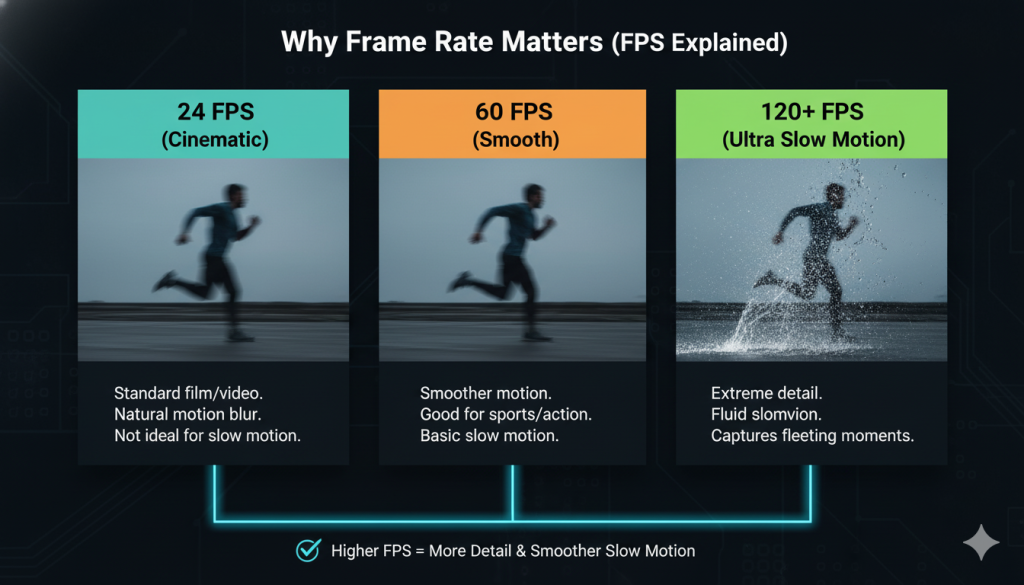
Not every video can be slowed down. The editor must check the footage frame rate before deciding how much slow motion is possible without losing quality.
FPS Basics
- 24fps / 30fps: Not ideal for slow motion
- 60fps: Good for smooth moderate slow motion
- 120fps / 240fps: Best for high-quality, cinematic slow motion
5. Why U.S. & Canadian Clients Hire Indian Slow Motion Editors
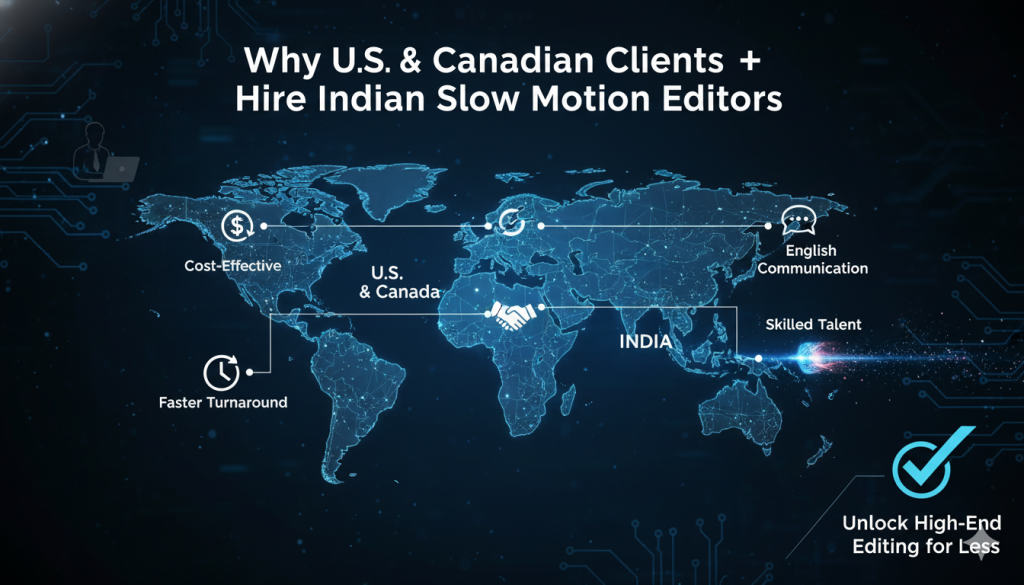
Indian editors are globally known for their speed ramping, timing, and visual storytelling skills. Combined with affordability and strong command of Western editing styles, they deliver high-end results for clients overseas.
Why Foreign Clients Prefer Indian Editors
- Cost-effective pricing
- Strong understanding of cinematic slow-mo styles
- Expert-level speed ramping and time remapping
- Fast turnaround
- Compatibility with YouTube, Instagram, TikTok trends
6. Software Used for Slow Motion Editing
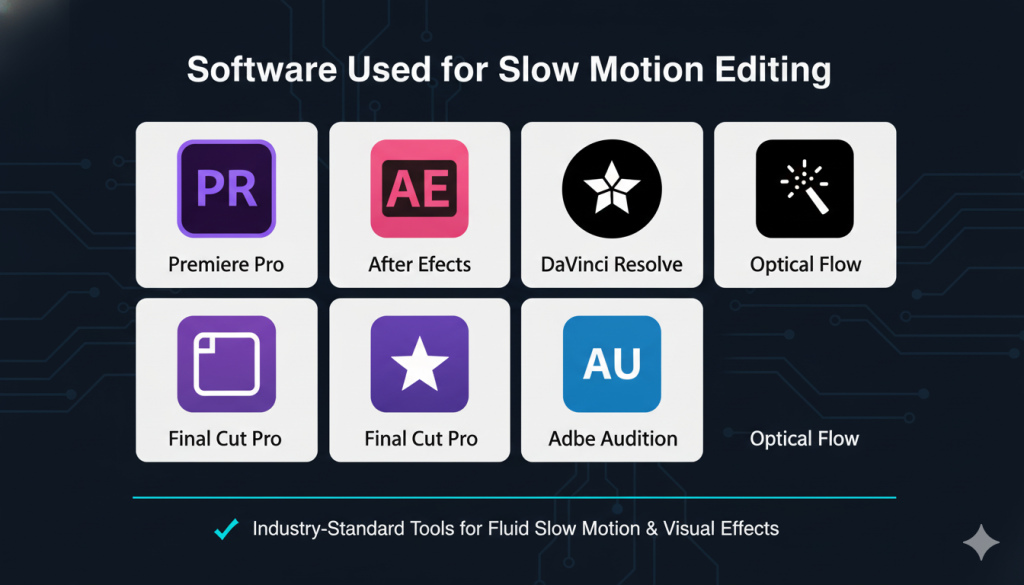
Professional slow motion editing depends heavily on software tools that support frame interpolation and optical flow.
Popular Tools
- Adobe Premiere Pro
- Final Cut Pro
- DaVinci Resolve
- After Effects (for motion interpolation)
- Twixtor Pro (advanced slow motion plugin)
7. Agency Workflow for Smooth Slow Motion Editing
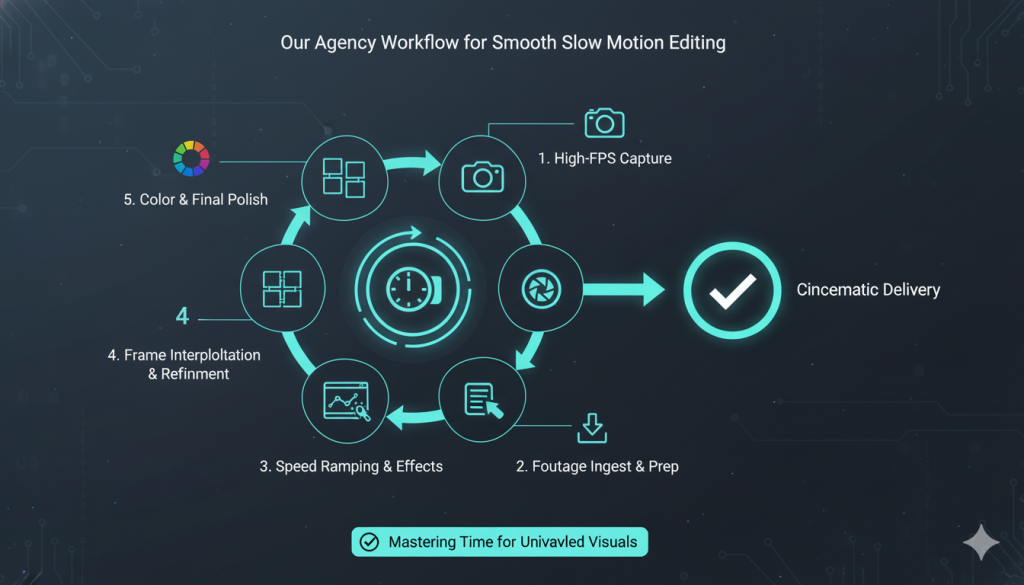
At our agency, we combine advanced tools with creative timing to produce buttery-smooth slow-motion visuals.
Our Process
- Step 1: Analyze footage FPS
- Step 2: Adjust speed and speed ramps
- Step 3: Apply optical flow or frame interpolation
- Step 4: Stabilize and sharpen the slowed clip
- Step 5: Add music sync, impacts, and cinematic sound
- Step 6: Final review by a senior editor
8. Mistakes Beginners Make With Slow Motion
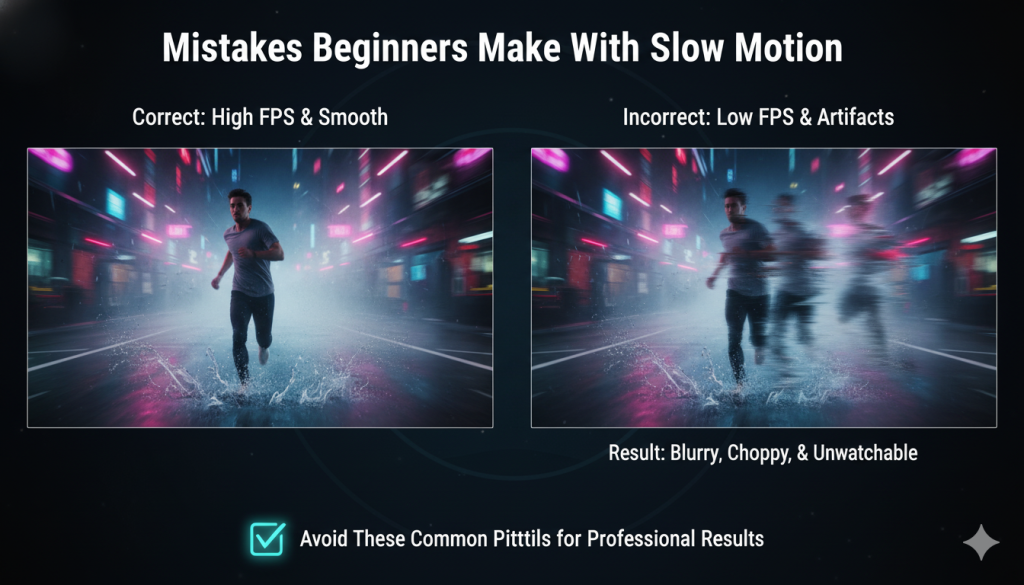
Most bad slow motion comes from using the wrong footage or editing technique. That’s why professional editors are necessary to avoid quality loss.
Common Issues
- Using 24fps footage for slow motion
- Overusing slow motion without purpose
- Ghosting caused by incorrect frame blending
- Shaky footage without stabilization
- Unmatched sound and timing
Conclusion
Slow motion is not just a cool effect — it’s a storytelling tool that adds impact, emotion, and cinematic value to every video. When done correctly, it elevates your content to a professional level and dramatically increases viewer engagement.
Key Takeaways:
- Slow motion enhances emotional and visual storytelling
- High FPS footage produces the best results
- Skilled editors use advanced tools like optical flow and Twixtor
- Indian editors offer top cinematic quality at global-friendly pricing
- Agencies guarantee consistency, quality, and workflow reliability
If you want smooth, cinematic slow-motion edits that feel premium and expertly crafted, our post-production agency is ready to elevate your content to the next level.